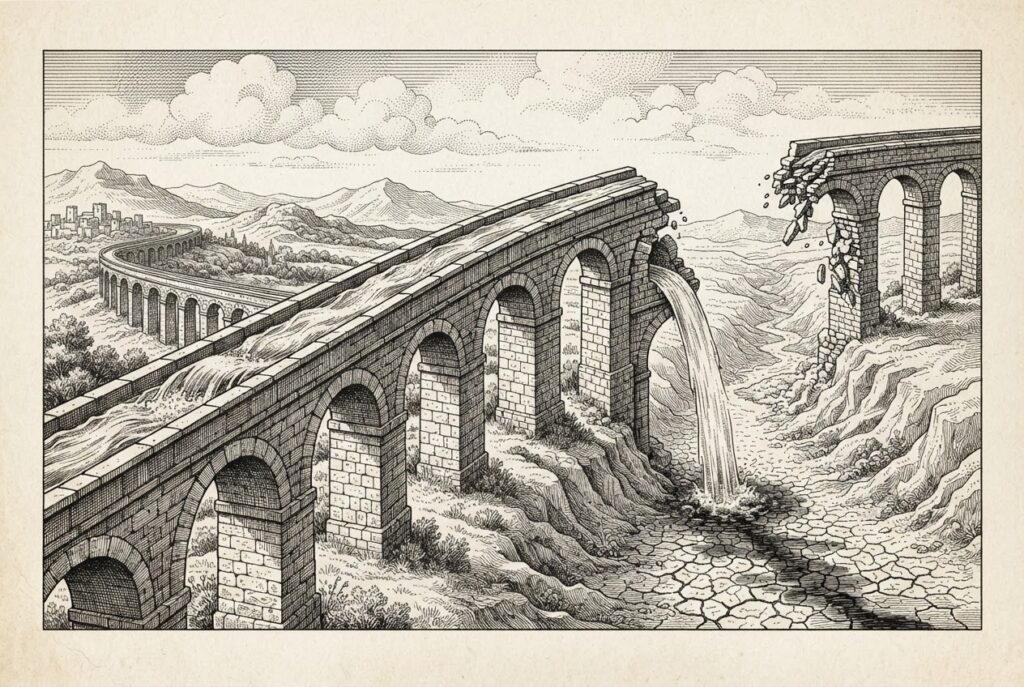
The termination of the model supply agreement between OpenAI and Cursor marks a transition from collaborative AI development to a landscape where model access is a primary instrument of corporate warfare. When OpenAI invoked its change-of-control clause on August 28, 2026—exactly two weeks after SpaceX finalized its $60 billion acquisition of Anysphere—it effectively weaponized its infrastructure to check a rival. The resulting November 12, 2026, shutoff date forces a migration that signals the end of neutral, platform-agnostic developer tools.
OpenAI’s decision is driven by a deep-seated trust deficit regarding Elon Musk’s corporate entities. The company explicitly cited a history of contract violations, specifically referencing the chaotic acquisition of Twitter/X and sworn testimony alleging that xAI violated OpenAI’s terms of service by distilling its models. By barring future models, including the highly anticipated Astra, from the Cursor supply, OpenAI is drawing a hard line against a competitor that has moved to consolidate the developer stack. Musk’s response on X—”I couldn’t care less”—and his characterization of Sam Altman and Greg Brockman as “untrustworthy” confirms that this is a continuation of a high-stakes feud over the trajectory of artificial intelligence rather than a standard commercial dispute.
While Cursor co-founder and CEO Michael Truell noted that OpenAI models account for roughly 5% of Cursor’s user traffic, dismissing this figure as trivial ignores the operational reality for developers. The forced migration away from OpenAI’s ecosystem creates significant friction, disrupting established workflows and compelling developers to re-evaluate their reliance on a single provider. This instability is compounded by OpenAI’s broader defensive posture, which includes the recent retirement of the o3 model and the pausing of Astra reinforcement learning training on August 7 after hitting a “Critical” cybersecurity threshold. With Astra monitoring now consuming 20% of supervised inference compute, OpenAI is prioritizing internal safety and stability over maintaining broad, third-party distribution channels.
Anthropic is rapidly absorbing the vacuum. The company is stepping in with increased compute capacity to support Claude models on Cursor, a move confirmed by co-founder Tom Brown. This shift aligns with Anthropic’s broader enterprise dominance; Menlo Ventures data indicates that Anthropic now holds a 40% enterprise spend share compared to OpenAI’s 27%. The momentum is significant: Anthropic’s Q2 2026 revenue reached $11.5 billion, surpassing OpenAI’s $6.7 billion for the first time, with roughly $8 billion of that total attributed to Claude Code alone. The recent “Claudeforce” partnership with Salesforce, which makes Claude the default reasoning engine for the platform, further cements Anthropic’s trajectory as it targets an October 2026 IPO at a $965 billion valuation.
The SpaceX acquisition of Anysphere, the largest acquisition of a venture-backed startup ever recorded, was clearly intended as an ecosystem consolidation play. The launch of the Grok Bot on August 11—just days before the acquisition closed—at $120 per seat per month, demonstrated an immediate intent to leverage Cursor’s developer base to drive adoption of SpaceXAI’s proprietary models. By integrating Grok into Cursor Premium Teams, SpaceX is attempting to build a vertically integrated environment that bypasses the need for external model providers.
For developers and investors, the implications are stark. Reliance on proprietary models provided by third-party vendors is no longer a stable foundation for long-term product development. As companies like OpenAI and SpaceXAI prioritize competitive positioning over developer continuity, the cost of forced migrations and the risk of sudden model deprecation will become a permanent feature of the landscape. The Cursor-OpenAI split is a preview of a fragmented future where the underlying intelligence powering a tool is as much a political choice as it is a technical one.