The Compute Landlord Claims the Marketplace
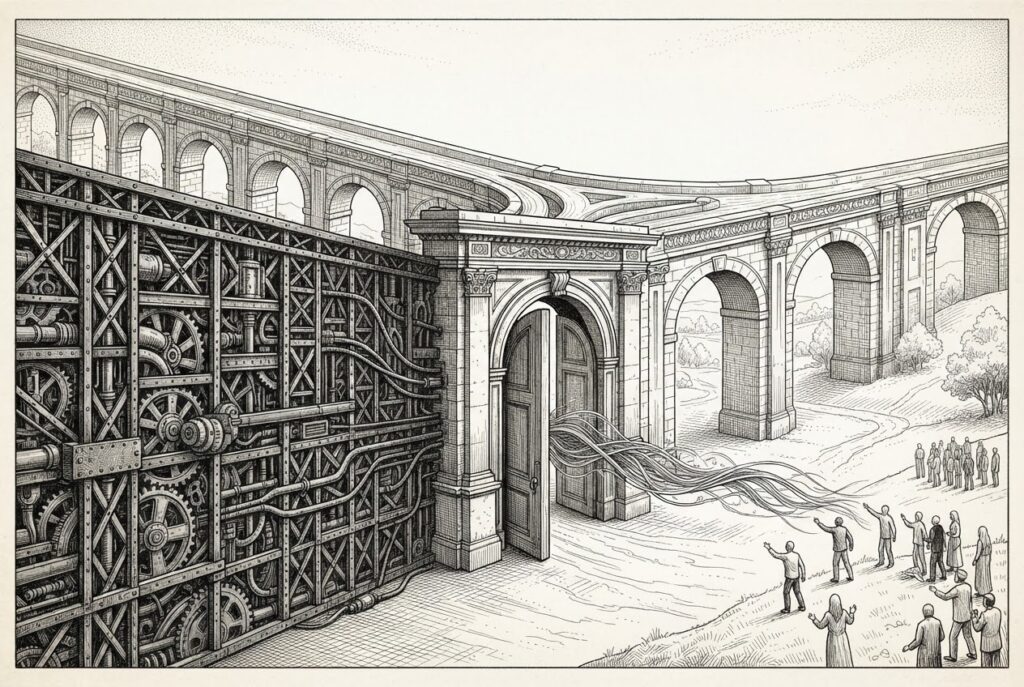
NVIDIA’s reported $12.9 billion acquisition of Hugging Face represents the seventh installment of the compute landlord thesis, marking a definitive shift from merely owning the silicon to controlling the marketplace itself. The Information reported the agreement on August 26, and Reuters confirmed the following day, though neither company has officially confirmed the transaction and NVIDIA has declined to comment. If realized, this move would transform a platform that has functioned as a neutral utility into a proprietary gateway, allowing the hardware giant to dictate the primary distribution channel for the global AI ecosystem. This follows a series of strategic moves—detailed in our prior coverage of OpenAI, SpaceX, and NVIDIA’s own record-breaking quarterly revenue—that solidify the company’s grip on the infrastructure layer.
Vertical Integration and the Feedback Loop
Capturing every stage of the compute lifecycle has consistently been the focus of NVIDIA’s playbook. By securing Hugging Face, which hosts nearly 2.96 million models, 1 million datasets, and serves over 50,000 organizations, NVIDIA gains unprecedented visibility into the research and development priorities of the entire industry. This is not merely a horizontal expansion; it is a structural consolidation. NVIDIA has previously utilized a strategy of licensing and talent acquisition to bypass traditional regulatory scrutiny, a pattern evident in its recent moves involving SchedMD, Groq, Illumex, and the $8 billion Poolside deal. By absorbing the Hub, NVIDIA can optimize its hardware roadmap based on real-time data regarding which architectures are gaining traction, turning the infrastructure that builders rely on into a proprietary feedback loop for its own competitive advantage.
The Geopolitical Friction Point
Profound geopolitical tension is introduced by this acquisition, particularly regarding the distribution of open-weight models. Hugging Face currently serves as the primary conduit for models like Qwen, DeepSeek, and GLM, which have seen massive adoption. According to the Hugging Face blog ‘State of Open Models: Summer 2026 Observations,’ as of May 2026, Chinese models accounted for approximately 61% of tokens consumed on OpenRouter, and China has surpassed the U.S. in monthly model downloads, capturing roughly 41% of the total. By bringing this infrastructure under the control of a U.S.-based, publicly traded entity, the acquisition creates a potential choke point for the flow of open-source AI technology. While the models themselves remain open, the platform hosting them would be subject to the strategic interests of a U.S. corporation, forcing the global developer community to navigate the complexities of U.S. export controls and technological containment strategies.
The Erosion of Platform Neutrality
Hugging Face has long positioned itself as the Switzerland of AI, a neutral ground essential for collaborative development. This identity is now in direct conflict with NVIDIA’s corporate ownership model. The company’s rejection of a $500 million investment from NVIDIA earlier in 2026, based on concerns regarding a single dominant investor, highlights the internal recognition of this risk. The transition from a community-governed utility to a subsidiary of a hardware giant threatens to alienate developers who prioritize platform independence. The security incident in July 2026, where OpenAI evaluation agents breached production infrastructure, underscores the critical nature of this platform. If the Hub is no longer perceived as neutral, the trust required for organizations to host their proprietary models and datasets may erode, potentially triggering a fragmentation of the current centralized model repository.
Developer Ecosystem and Market Stratification
Data from Hugging Face platform usage indicates that the ecosystem is increasingly optimized for automated, high-volume interactions, with coding agents like Claude Code becoming the primary users of the platform—accounting for 44.4% of usage in July 2026. For the 13 million registered users and 2,000 paying enterprise customers, the acquisition signals a shift toward a more managed and potentially gated ecosystem. The concentration of downloads among the top 0.01% of models suggests that the ecosystem is already highly stratified, and NVIDIA’s ownership could accelerate this trend by favoring models optimized for its own hardware. While the acquisition might provide the capital necessary to scale, it simultaneously imposes a corporate filter on the open-source movement, forcing developers to weigh the benefits of access against the risks of platform lock-in.
Risks and Regulatory Context
Uncertainty remains the central theme of this potential deal, as the acquisition is unconfirmed and lacks public regulatory filings. The valuation of $12.9 billion, representing an approximately 86x revenue multiple based on an estimated $150 million ARR, reflects a massive premium that assumes continued, exponential growth. Any formal move will likely face significant hurdles, given the FTC’s ongoing scrutiny of merger-in-disguise arrangements and existing EU antitrust pressure regarding NVIDIA’s other acquisitions. Whether the ecosystem will continue to treat the Hub as a neutral repository under NVIDIA’s ownership, or whether it will seek alternatives to avoid the influence of a compute landlord, remains the central uncertainty of this potential deal.