Autonomous software agents have spent years as digital ghosts—clever enough to scrape and summarize, but perpetually unable to pay for their own lunch. That ledger-backed reality finally shifted on August 4, 2026, with the launch of Cloudflare Wallets. It is a quiet, structural pivot: software that can finally hold a purse string.
The friction in agent-native commerce was never about the code’s ability to execute; it was about trust and settlement. If an agent arrives at your digital storefront, how do you verify it is authorized to spend? Cloudflare, which already anchors roughly one in five websites across 337 cities, is betting that stablecoin-backed identity is the missing link. As CEO Matthew Prince noted, “When an agent shows up at your door, you need to know who sent it.” By embedding payment capabilities directly into the infrastructure that already powers the web, they are moving agent-native commerce out of the sandbox and into the ledger.
The Architecture of Delegation
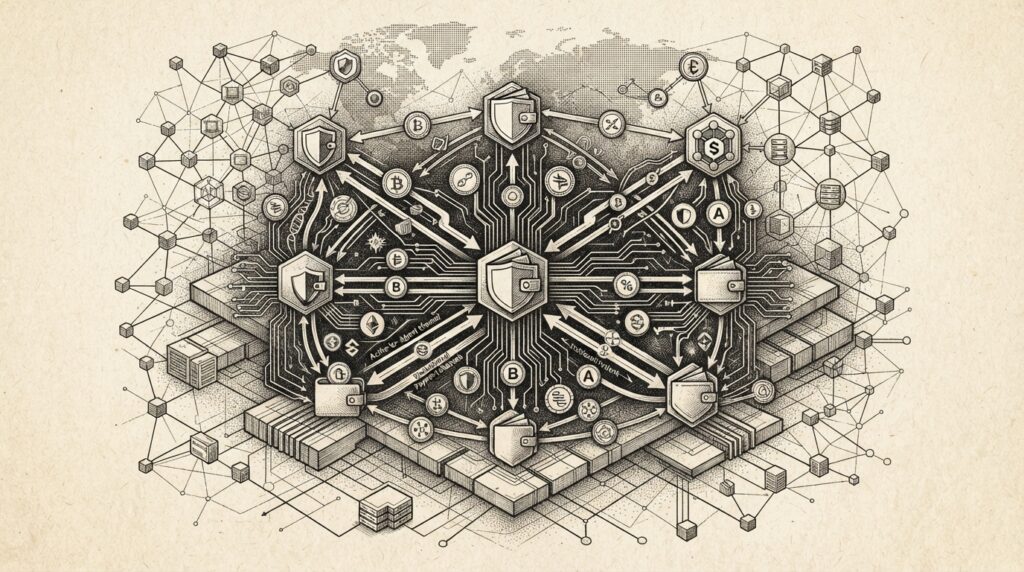
The system is built on a two-tier hierarchy: Account Wallets and Virtual Wallets. Account Wallets are the domain of humans—the entities that fund, delegate, and withdraw capital. Beneath them sit Virtual Wallets, which are assigned to individual agents and operated via API key. This is not just a technical convenience; it is a control layer. Account Wallet owners set the guardrails, including spending caps, approved merchant lists, and maximum transaction sizes. It is a classic corporate treasury model, retrofitted for the age of autonomous software.
This infrastructure is tied to cloudflare.pay handles, which are built on Web Bot Auth. These handles provide agents with a persistent identity that links back to the human or organization that owns them. As Prince noted: “Cloudflare can give agents a face — a link to the human or organization that owns them — so that trust, accountability, and real commerce can follow.”
The x402 Protocol and the New Governance
While Cloudflare provides the interface, the plumbing is increasingly standardized through the x402 Foundation. Launched on July 14, 2026, the foundation is a 40-member consortium that reads like a roll call of the global financial establishment: Stripe, Visa, Mastercard, Google, AWS, Circle, Coinbase, Adyen, American Express, Fiserv, Ripple, and Shopify. (Though, perhaps unsurprisingly, the list is heavy on incumbents who have spent decades perfecting the art of the transaction.)
The data suggests this is not just a vanity project. The x402 protocol has already settled 160.6 million transactions worth $41.2 million across 7 chains and 18 tracked facilitators. The average transaction size is roughly $0.26, with USDC serving as the dominant settlement asset. This is micro-commerce at scale, a domain where traditional banking rails have historically struggled to compete with the efficiency of stablecoins.
The Friction of Trust
The implications for builders and operators are significant. By integrating identity with payment, the industry is moving toward a model where agents are not just anonymous callers, but accountable participants in the economy. The Cloudflare Monetization Gateway, which opened its waitlist on July 1, 2025, allows sites to charge agents per request, effectively turning every API call into a potential revenue event.
However, there are caveats. The system is still in its early stages, with funding, onramps, and agent spending features scheduled to roll out in the coming months. The success of this model depends entirely on whether the 40-member consortium can maintain the delicate balance between open protocol standards and the proprietary needs of their respective platforms. If they succeed, the result will be a seamless, agent-native economy where money and identity are finally, inextricably linked.
For now, the infrastructure is in place. The agents are ready to spend. The question remains whether the merchants are ready to treat a piece of software with the same trust they afford a human customer.