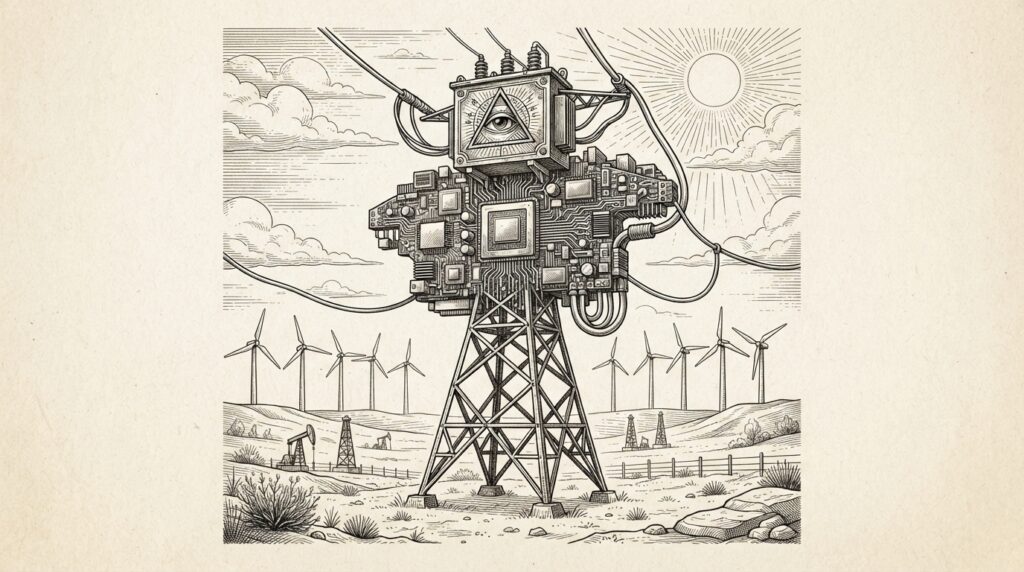
The bottleneck for AI has shifted from compute capacity to the electricity required to run it. Nvidia, which has spent the past two years underwriting the financial existence of its largest customers through vendor financing and credit substitution, is now crossing a different threshold entirely: equity ownership in the power infrastructure that sustains its hardware. According to The Information, the chipmaker has agreed to invest up to $3 billion in Lancium, the developer behind the Stargate data center campus in Abilene, Texas. The terms remain unconfirmed by either party, but the structural move is unambiguous.
The reported deal involves an initial $2 billion commitment for an approximate 20% equity stake, with an additional $1 billion contingent on Lancium hitting specific grid hookup milestones. At a roughly $10 billion enterprise value, full execution would push Nvidia’s ownership to approximately 30%. This is not a passive financial investment. It is a direct hedge against the power scarcity that threatens to throttle the deployment of Nvidia’s next-generation Vera Rubin architecture at the exact sites designed to consume it.
Lancium’s own history makes the power economics tangible. Founded in 2018 in Houston, the company initially built patented demand-response technology for flexible renewable energy loads, discovering that bitcoin mining was the only application that fit. The April 2024 Bitcoin halving compressed mining margins and forced a strategic pivot. By July 2024, Lancium and Crusoe Energy announced a multibillion-dollar deal to build a 200 MW AI-focused data center outside Abilene — the first phase of a 1.2 GW build-out. The 1,000-acre Clean Campus, now known as Stargate 1, is engineered for approximately 400,000 Nvidia AI chips across eight buildings, each designed to support up to 50,000 GB200 NVL72 units on a single integrated network fabric. The sub-5-second demand-response technology that once stabilized crypto-mining loads is being repurposed to manage the volatile power demands of high-performance AI clusters. Behind-the-meter battery storage, solar, and proximate wind resources round out the energy architecture.
The deal also sharpens a financial connection that has been building across the compute landlord thesis. Blackstone owns approximately 50% of Lancium, having invested over $500 million. It is the same Blackstone that led Anthropic’s $36 billion special purpose vehicle financing for chip leases — the credit-funded mechanism we explored in Part Four of this series. By combining power-infrastructure equity with chip-lease debt, Blackstone is positioning itself as the connective tissue of the AI compute economy. The Stargate joint venture — SoftBank, OpenAI, and Oracle, announced in January 2026 with a potential $500 billion investment scope — sits at the center of this infrastructure layer, with Crusoe Energy developing the initial buildings and Lancium providing the grid connection.
This is Part Six of our compute landlord thesis. We have traced the progression from Volta Infra’s $10 billion infrastructure play and SpaceX’s 10 GW equity-funded model, through Nvidia’s $600 billion vendor-financed exposure to OpenAI and Anthropic’s $71 billion in credit-funded SPV debt. Each iteration has added a new funding mechanism to the same structural objective: securing the scarce resource. Equity-funded, vendor-financed, credit-funded — and now power-infrastructure equity. The funding mechanism is proving to be as important as the hardware it purchases. As Lancium explores a potential IPO in 2027, the race for AI dominance is being defined not by who builds the best model, but by who secures the power to run it.