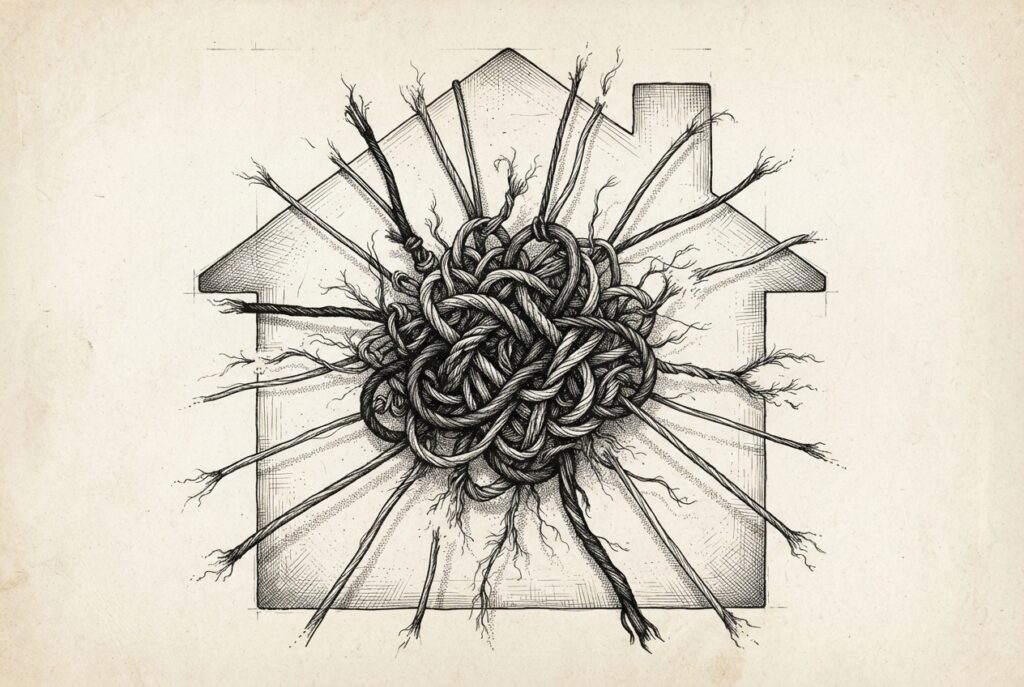
A recent report from The Verge documented a home with nine separate Thread networks — all nominally part of the same smart home ecosystem. The homeowner didn’t break anything. The systems were working as designed. That is the problem.
Matter, the connectivity standard launched in late 2022 by the Connectivity Standards Alliance (CSA), was supposed to end the protocol wars. If a device carried the Matter badge, it would work with Apple Home, Google Home, Samsung SmartThings, Home Assistant, and every other controller. Thread, the low-power mesh networking protocol that underpins most Matter devices, was supposed to provide the unified transport layer. The marketing promise was simple: buy any Matter device, pair it with any Matter controller, and everything talks to everything.
The reality is more nuanced — and more fragmented. Different controller implementations maintain separate Thread fabrics. Apple’s HomeKit runs its own Thread border router network. Google Home runs another. Samsung SmartThings runs a third. Devices on the same physical Thread protocol cannot always communicate across these ecosystem boundaries because the controller software creates logical separation that the hardware does not. The nine-Thread-networks household is not a bug; it is the natural outcome of multiple controllers each claiming sovereignty over their own fabric.
The staggered adoption of Thread 1.4 across platforms compounds the problem. Apple shipped Thread 1.4 support in the tvOS 27 beta, but Google and Amazon have not committed to production timelines before 2026. Matter 1.4 and 1.4.2 addressed some interoperability gaps, but Matter 1.6 — the version with Joint Fabric, designed to let devices participate in multiple controller fabrics simultaneously — shipped in June 2026 with uneven ecosystem support. Consumers running mixed-platform homes are stuck in the gap between what the specification promises and what their specific combination of controllers actually delivers.
The fragmentation has a direct consequence for the local-first AI movement. Home Assistant 2026.8 shipped with llama.cpp and Ollama integrations, enabling local AI models to control smart home devices without cloud round-trips. The 2026.9 beta added a Matter network map as a headline feature — topology visualization, link quality indicators, RSSI data — because consumers need diagnostic tools to understand their own mesh. Local AI agents require reliable, low-latency device communication to function. When a single home has nine separate Thread networks with inconsistent cross-controller routing, the latency and reliability guarantees that local AI needs to operate effectively break down.
The industry’s answer is Matter 1.6 Joint Fabric, but adoption will be slow. Every controller vendor needs to implement it, every border router needs a firmware update, and every existing Matter device needs to support the new fabric negotiation protocol. The Thread Group’s specification split between 1.3 and 1.4 means older border routers may never support the unified fabric model. For the foreseeable future, consumers with multi-platform homes will continue to experience the paradox of Matter compliance without Matter interoperability.
For investors and product teams, the gap between Matter the specification and Matter the deployed reality creates a durable market for middleware, diagnostics, and platform-agnostic controllers. Home Assistant’s bet on local-first AI with integrated Matter diagnostics positions it as the neutral layer in a fragmented landscape. The question is whether the CSA’s Joint Fabric implementation will eventually close the gap — or whether the ecosystem’s structural incentives toward platform differentiation make permanent fragmentation the more likely outcome.