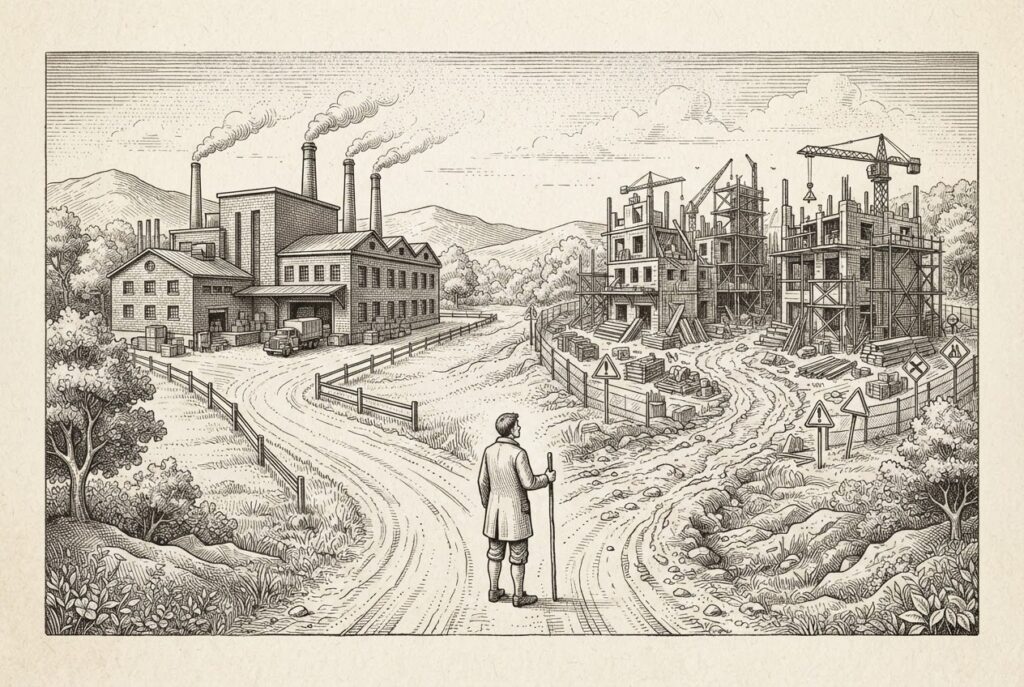
According to the McKinsey State of AI 2026 report, 32% of organizations have decided against buying off-the-shelf software, opting instead to build their own solutions using agentic coding tools.
The enthusiasm for building in-house is not distributed evenly. It is most pronounced among what McKinsey identifies as “high performers”—the 6% of respondents who attribute at least 5% of their EBIT to AI. Nearly half of these high performers are skipping software purchases, compared to 31% of their peers. Large enterprises with over $1 billion in revenue are also leaning in, with 40% now scaling agents in one or more functions, a significant jump from 27% the previous year. When we look at the industry breakdown, the technology sector leads the pack at 41%, followed by healthcare payers and providers at 39%, and professional services and energy at 38%.
Lieven Van der Veken, a senior partner at McKinsey, notes that this is a deliberate strategic pivot. “Leaders are asking what their organisations need to build AI tools themselves,” he says. “The rise of software coding agents and in-house development is one clear sign of this broader shift.” According to Van der Veken, the most successful organizations are becoming more selective about where to buy, where to build, and where to develop internal capabilities to scale what works. Crucially, these leaders are starting to treat operating costs as a design constraint rather than an afterthought.
However, there is a significant gap between this build-it-yourself ambition and the reality of project outcomes. While the allure of custom-built agents is strong, the track record for internal development is sobering. Research from MIT NANDA suggests that internally built systems succeed only about 33% of the time, whereas vendor-purchased tools boast a success rate of roughly 67%. The complexity of deploying these systems is further highlighted by Gartner, which predicts that over 40% of agentic AI projects will be canceled by the end of 2027 due to escalating costs, unclear business value, and inadequate risk controls.
This execution gap is visible in current adoption metrics. While Forrester reported in June 2026 that roughly 75% of organizations are adopting agentic AI, only a small minority have reached meaningful production. Other data points reinforce this struggle: the Gartner CIO Survey 2026 found that only 17% of organizations have actually deployed agents, and Deloitte‘s 2026 Tech Trends report places the number of production-ready agentic systems at just 11%.
The pressure to succeed is mounting as organizations face real-world constraints. McKinsey reports that 20% of organizations are already feeling the pinch of AI operating costs. This financial strain is occurring against a backdrop of rising workforce anxiety, with 39% of employees now expecting their employer to cut jobs next year, up from 32% in the previous survey. When companies bet on internal builds that fail to deliver, the cost isn’t just measured in wasted development hours; it is measured in the stability of the organization and the morale of its workforce.
The trend toward building with agentic tools suggests that the enterprise software market is entering a period of intense volatility. While the promise of custom-built, agentic workflows is compelling, the data suggests that many organizations are underestimating the difficulty of the task. For decision-makers, the challenge is no longer just about whether to build or buy, but whether they have the discipline to avoid the high failure rates that currently plague internal AI development. As Van der Veken suggests, the winners will be those who treat their operating costs as a design constraint, rather than those who simply chase the latest development trend.